
Top 100 Fantasy Books Of All Time
Looking for great fantasy books? Take a look at the 100 pages we rate highest
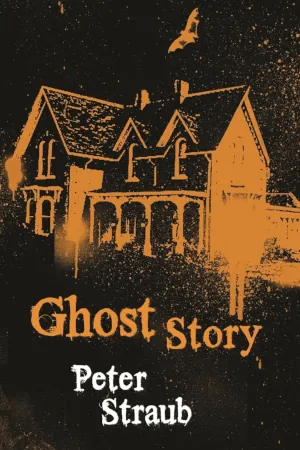
If the ghost story is a genre of echoes, Peter Straub's "Ghost Story" is a grand cathedral built to capture every resonance. Published in 1979, the novel serves as both a tribute to the masters - Poe, Hawthorne, and James - and a terrifying reinvention of American Gothic fiction. The narrative centres on the "Chowder Society," a group of elderly friends in the town of Milburn who meet to share ghost stories as a way to distract themselves from a shared, decades-old secret.
Straub's brilliance lies in his layering of reality. What begins as a series of disparate, eerie anecdotes slowly coalesces into a singular, sprawling nightmare. The protagonist is not one man, but the collective memory of the group, which is gradually dismantled by an entity that is both ancient and adaptive. This "shape-shifter" serves as a metaphor for the way past transgressions refuse to stay buried, manifesting as the very things its victims fear most.
The prose is dense and literary, demanding a level of patience that pays off in a crescendo of supernatural dread. Straub excels at the "slow burn," building a sense of wintery desolation that feels as cold and unforgiving as the Milburn snow. He masterfully balances the "small-town" intimacy of the setting with a cosmic sense of horror, suggesting that the monsters we create through our own moral failings are just as dangerous as any ancient spirit.
While "Ghost Story" features visceral moments of terror, its most lasting impact is its psychological depth. It is an exploration of aging, friendship, and the heavy burden of guilt. Straub proves that the most effective ghosts are not those that rattle chains, but those that force us to look back at the people we used to be. It remains one of the most ambitious and successful horror novels of the twentieth century.
10/10 from 1 reviews
Looking for great fantasy books? Take a look at the 100 pages we rate highest

There's nothing better than finding a fantasy series you can lose yourself in

Our fantasy books of the year, from 2006 to 2021